|
APRIL 2026 |
The Cardio Number That Predicts How Long You'll LiveWhy VO2 Max Matters More After 60 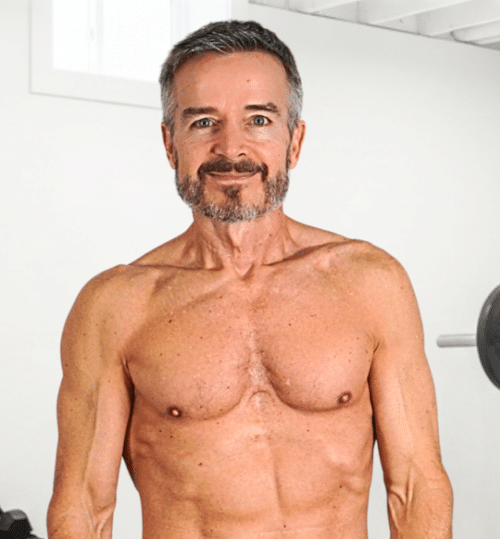
There’s one fitness number that predicts how long you’ll live more accurately than your blood pressure, your cholesterol, or whether you smoke. It’s called VO2 max, and most people over 60 have never heard of it. That’s a problem, because VO2 max is one of the few markers of aging that you can easily improve through training. And the improvements translate into more years of independent, capable living. This month, I’ll explain what VO2 max is, why it matters so much after 60, and how to actually train it. I’ll also share my own number from a sports lab test, and what I’m doing this summer to push it higher. Joe Burjoski (Age 65) |
Why VO2 Max Is the Longevity Metric That Matters Most
VO2 max measures how much oxygen your body can use during hard exercise. The higher the number, the better your heart, lungs, and muscles work together. It’s the single best measure of cardiovascular fitness we have. Why this matters after 60: a landmark study tracking over 122,000 adults found that low VO2 max was associated with a higher risk of death than smoking, diabetes, or heart disease. People in the lowest fitness category were five times more likely to die over the study period than those in the elite category. The researchers also found no upper limit to the benefits. Higher fitness kept paying off, even at the top end. There was no point at which additional cardio capacity stopped extending life. Incredible. VO2 max is one of the most trainable longevity factors we have. You can’t change your genes or your age, but you can change your VO2 max, and even small improvements significantly shift your odds. |
Zone 2: Building Your Aerobic Foundation
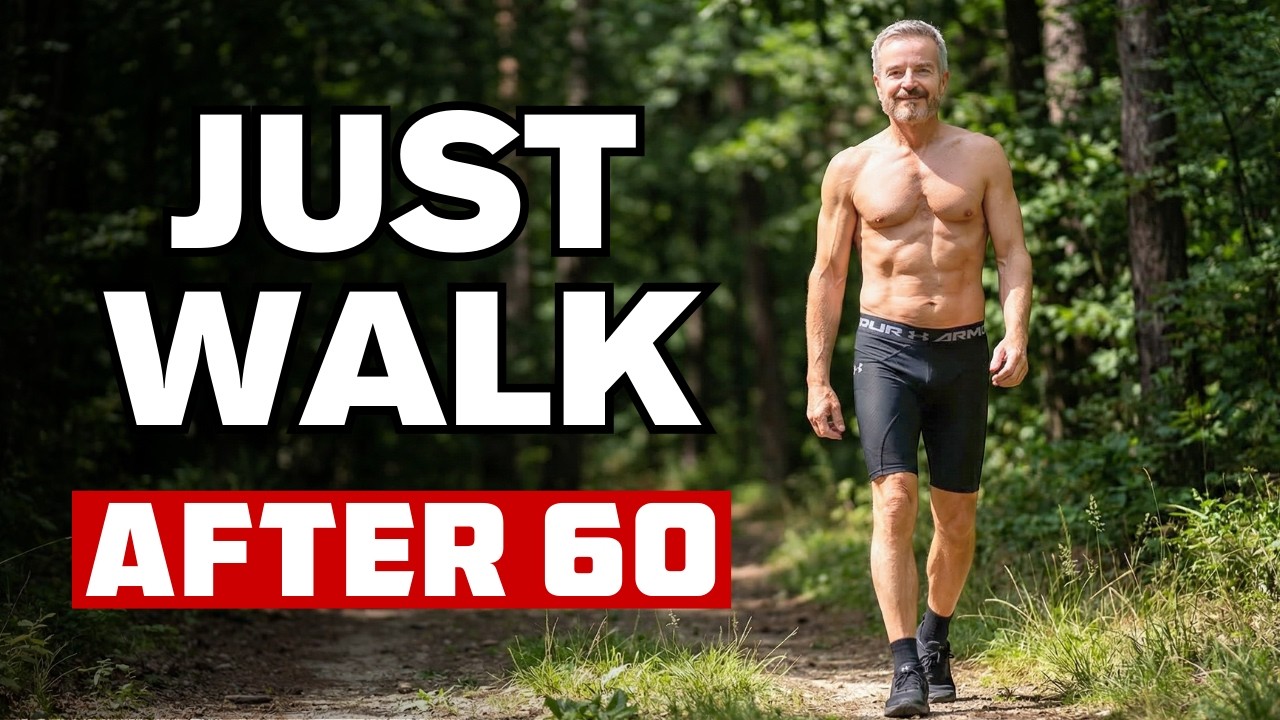
If you’re new to cardio after 60, the smartest place to start is zone 2 training — steady cardio performed at a pace that’s challenging but sustainable. The simplest way to find zone 2 is the talk test. You should be able to speak in full sentences, but not comfortably hold a conversation. If you can sing, you’re going too easy. If you can only get out a few words at a time, you’re going too hard. Brisk walking (my favorite), light cycling, swimming, and rowing all work beautifully in this zone. The goal is duration, not intensity. Aim for 30 to 60 minutes, three or four times a week. This builds a powerful aerobic base. Zone 2 builds cardio-respiratory foundation. It develops mitochondria, improves fat burning, and gives your heart and lungs the engine they need to handle harder work. But zone 2 alone isn’t the fastest way to raise your VO2 max. For that, you need to push harder sometimes. More on that below. Start with Zone 2. Stay consistent. Then add intensity later. |
Free Course: Stay Strong, Stay Young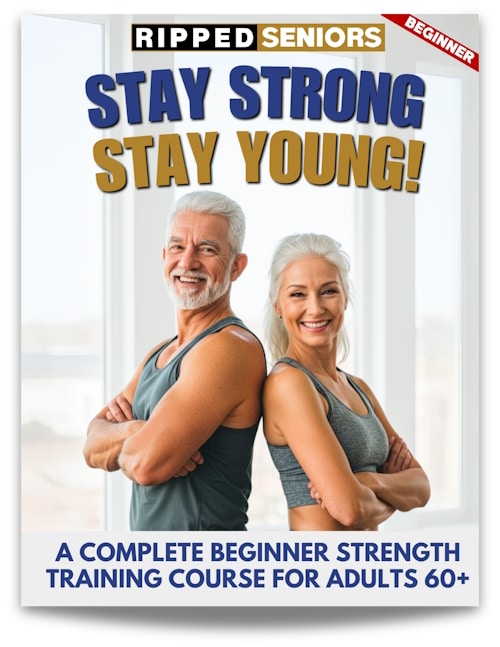
If you’re over 60 and new to strength training, or it’s been years, Stay Strong, Stay Young gives you a safe, simple way to begin. This free course teaches the 8 essential exercises every 60+ adult should master, using short at-home workouts that build strength, balance, and confidence, without a gym or complicated routines. Click the button below to download your free course.
|
My VO2 Max Test: What I Learned From a Sports Lab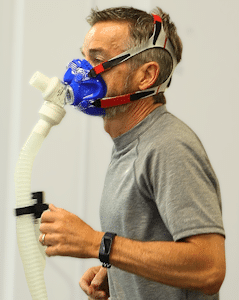
In July 2023, I had my VO2 max tested at a sports performance lab. They strapped on a mask, put me on a treadmill, and ramped up the intensity until I couldn’t go any further. My number came back at 37.7, which placed me in the “Excellent” category for my age. What surprised the technician was that my only cardio training at the time was brisk walking. No running. No cycling. No HIIT. Just consistent, brisk walking, most days every week. You don’t need extreme training to build excellent cardio fitness after 60. Consistency does most of the work. But I’m also not done improving. This summer, I’m testing again. As part of my prep for a Tough Mudder obstacle race in the fall, I’ve added HIIT to my training, and my Garmin currently estimates my VO2 max at 42. The “Superior” cutoff for my age is 44.2 — that’s the number I’m chasing. I’ll share the results when they come in. |
How to Find Your Own VO2 Max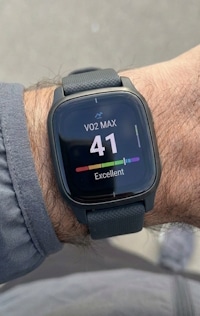
Want to know your V02 max? Here are three options with different levels of accuracy and effort. Your fitness watch. A Garmin, Apple Watch, Pixel Watch, or similar device will estimate your VO2 max after you’ve worn it during a few weeks of regular cardio. It uses your heart rate response to exercise and is reasonably close to lab results for most people. This is the easiest place to start. A walk test at home. The Rockport 1-Mile Walk Test is the most accessible. Walk one mile as fast as you can on flat ground or a treadmill (don’t jog). Record your time and your finishing heart rate, then plug the numbers into an online Rockport calculator. It’s free, takes 20 minutes, and gives you a solid estimate. A lab test. A local sports performance lab will give you the most accurate result, like the test I did in 2023. You wear a mask, run or cycle to exhaustion, and get a precise measurement plus your training zones. Search “VO2 max test near me” — most cities have at least one lab that offers it, typically for $100–$200. |
Pushing Higher: HIIT and Action Bursts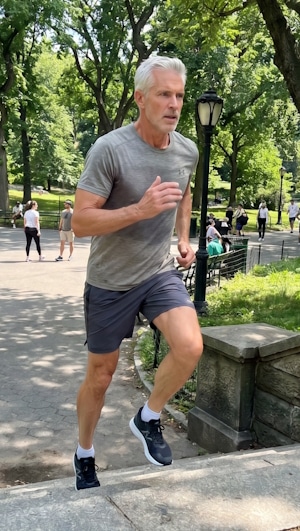
If zone 2 is the foundation, short bursts of high-intensity effort are what move your VO2 max higher. The research is clear: brief, vigorous activity produces bigger fitness gains than steady cardio alone. “High intensity” doesn’t have to mean a gym, a track, or a spin class. A landmark 2022 study from the University of Sydney found that ordinary people who built short bursts of vigorous activity into daily life — climbing stairs fast, walking briskly uphill, carrying groceries with purpose — saw remarkable benefits. Over the seven-year study, they had a 40% lower risk of early death and a nearly 50% lower risk of fatal heart attack. Researchers call this VILPA — Vigorous Intermittent Lifestyle Physical Activity. I call them Action Bursts. Aim for three Action Bursts per day, one to two minutes each. Climb a flight of stairs fast. Walk briskly from the far end of the parking lot. Rake leaves with intensity. Your heart rate should climb and your breathing should deepen — that’s the signal it’s working. You don’t need a gym to push your VO2 max. You need consistency and a little more “oomph” in things you already do. Deep dive here: https://www.nature.com/articles/s41591-022-02100-x
|
Boost Cardio with These Videos
|