|
MAY 2026 |
The Protein Number That Protects Your Muscle After 60Why 35 Grams per Meal Changes Everything 
If there’s one nutrition number every adult over 60 should know, it’s 35 grams of protein per meal. Not per day. Per meal. That number is the difference between losing muscle as you age and protecting it. And most people over 60 (even the ones trying to eat healthy) aren’t close to hitting it. I’ve been studying protein and aging for years now, and the more I learn, the more convinced I am that this single habit matters more than almost anything else you can do in the kitchen after 60. More than cutting carbs. More than counting calories. More than any supplement on the shelf. This month, I’ll walk you through why protein hits differently after 60, what 35 grams actually does inside your body, and the simple daily framework I use myself. I’m also launching a free guide that shows you exactly how to put it into practice. Details below. Joe Burjoski (Age 65) |
Why Protein Hits Different After 60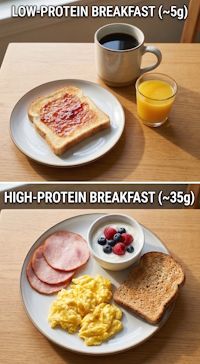
Three things change in your body after 60 that make protein more important than ever. You lose muscle faster. Starting in your 40s, you naturally lose 3 to 8 percent of your muscle mass per decade (sarcopenia). After 60, that rate accelerates. Less muscle means less strength, worse balance, slower metabolism, and a higher risk of falls and frailty. Your body resists protein. This one is called anabolic resistance, and it’s a game-changer. A 30-year-old can build muscle from a 20-gram protein meal. A 65-year-old eating the exact same meal gets a much weaker response. To get the same muscle-building effect, you need a bigger dose at each meal — roughly 30 to 40 grams of high-quality protein. Your body needs multiple doses per day. Protein triggers muscle protein synthesis, the process that builds and repairs muscle. But that response only lasts a few hours. One big steak dinner doesn’t make up for low-protein meals earlier in the day. The takeaway: after 60, you need more protein per meal AND you need to spread it across the day. |
The 35-Gram Protein Switch
Think of your muscle-building machinery like a light switch. Eat too little protein at a meal, and the switch doesn’t flip. Your body uses the food for energy, but it doesn’t maximize muscle growth. Eat enough protein, and the switch flips ON. Muscle protein synthesis kicks in, and your body actively builds and repairs muscle tissue. The trigger is an amino acid called leucine. Your muscles need about 2.5 to 3 grams of leucine in a single meal to flip the switch. For most foods, that translates to 30 to 40 grams of high-quality protein per meal. Below 30g, the muscle-building response is weak. Above 40g, you don’t get much extra benefit. I use 35 grams as the target because it’s high enough to flip the switch in almost everyone over 60, it’s easy to remember (one number, every meal), and it’s achievable with normal foods. A smaller-framed person under 140 lb can usually get away with 30g. A larger-framed person over 200 lb should aim for 40g. For everyone in between, 35g is the sweet spot. The number is the dose. Hit it three times a day, and you’ve solved most of the protein problem. |
Free Guide: The Ripped Seniors Protein Playbook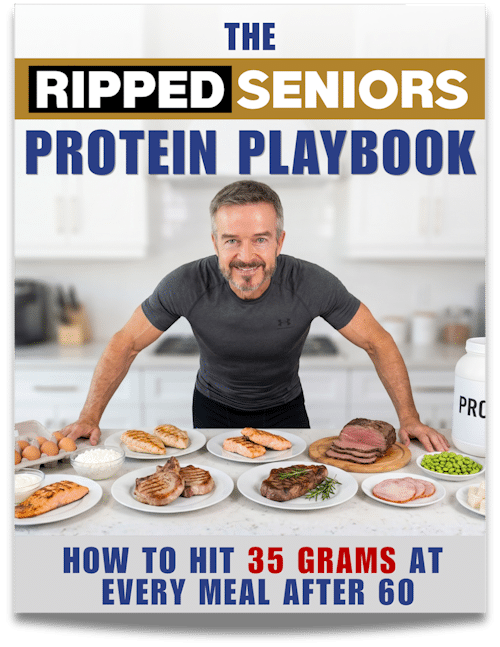
I’ve just released a brand new free guide that puts everything in this newsletter into practice. The Ripped Seniors Protein Playbook shows you exactly what 35 grams of protein looks like on your plate, with photos of real food, real portions, and a printable cheat sheet you can stick on your fridge. Inside you’ll find:
No counting. No apps. Just normal food, in the right portions, at the right times.
|
The 3+1 Protein Rule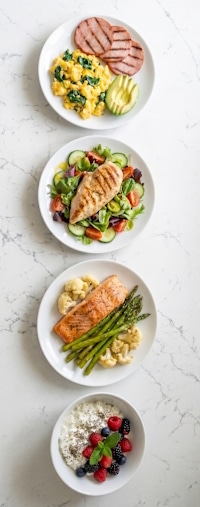
Once you know the 35g dose, the next question is “how many meals”? Here’s the framework I use myself: three protein-anchored meals per day, 35 grams each, for a daily total around 105 grams. That’s the baseline for active adults over 60. Hit that consistently, pair it with strength training, and you’ll be ahead of 90 percent of people our age. The “+1” is a fourth protein feeding before bed, and it’s optional. I add it because I’m training hard and trying to build muscle, not just maintain it. Your body goes 7 to 9 hours overnight without food, and a slow-digesting protein dose before sleep extends muscle building into the night. Good bedtime options are cottage cheese, Greek yogurt, or a casein shake. My personal go-to is a bowl of 1% cottage cheese with a little cinnamon. It takes 90 seconds to make and tastes like dessert. If your goal is to build muscle, lose weight, or you are larger-bodied, add the +1. If your goal is maintenance, three meals will do it. Three to hit the target. Four to push past it. |
The Protein Anchor Method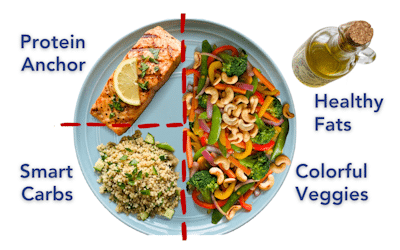
Don’t treat protein as an afterthought. Start every meal with the protein anchor and build everything else around it. Step 1: Pick the protein. 5 oz of chicken, salmon, lean beef, or pork. Or the equivalent in eggs, dairy, or plant protein. That’s your anchor. Step 2: Half the plate is vegetables. The more color and variety, the better. Vegetables don’t add much protein, but they bring the fiber, vitamins, and minerals your body needs to actually use the protein you eat. Step 3: A quarter plate of smart carbs. Sweet potato, brown rice, quinoa, oats, beans, or whole grains. More on training days, less on rest days. Step 4: A drizzle of healthy fats. Olive oil, avocado, nuts, or seeds. That’s it. No counting. No measuring. The portions take care of themselves once you start with the protein anchor. Build your plate around protein, not the other way around. |
The Five Protein Mistakes I See Most
Even people who care about their health get protein wrong. Here are the five mistakes I see most often in adults over 60. 1. Skimping at breakfast. This is the big one. Cereal or toast gives you maybe 5 grams of protein. You spend the entire morning in muscle-loss mode. Anchor breakfast with eggs, Canadian bacon, Greek yogurt, or cottage cheese. 2. Trying to catch up at dinner. You can’t bank protein. 80 grams at dinner doesn’t undo the 10 grams you ate at breakfast and lunch. Spread it out. 3. Overestimating protein in certain foods. Peanut butter, nuts, hummus, cheese, bacon — they all contain protein, but only a few grams per serving. They’re delicious. They’re not anchors. 4. Skipping strength training. Protein provides the building blocks, but strength training is what tells your body to use them. Without lifting, extra protein has limited benefit. 5. Avoiding protein powder. Whey, casein, and soy isolates aren’t processed junk — they’re concentrated protein, well-researched, and a legitimate way to hit your daily target. A scoop in water at breakfast or with yogurt can rescue an otherwise low-protein meal. Fix these five, and you’re already ahead of the curve. |
Eat to Stay Strong: Watch These Next
|