|
SEPTEMBER 2026 |
The Protein FightWhat Two Opposite Headlines Actually Mean After 60 
Welcome! Two protein headlines landed this year, and they pointed in opposite directions. In January, the official protein recommendation for adults went up by a lot. Then, in August, a review of more than 350 studies suggested that eating less protein might slow aging. If you saw both, like me, you might be confused. So I read the source material carefully, because I recommend a high-protein diet for people 60+ and need to know if I’d got it wrong. I hadn’t. But the reason why is more interesting than the headlines. Read on to find out. Joe Burjoski (Age 65) |
More or Less Protein? What Was Actually Reported
In January 2026, the USDA and Health and Human Services released the Dietary Guidelines for Americans. The protein target moved from the long-standing 0.8 grams per kilogram of body weight per day to a range of 1.2 to 1.6 grams. For a 165-pound person, that’s a jump from about 60 grams a day to somewhere between 90 and 120, a huge jump. Then in August, a research team led by Dudley Lamming at the University of Wisconsin–Madison published a review of over 350 studies on protein restriction and aging. Their finding: eating less protein was linked to better metabolic function, less cellular damage, and, in animals, longer life. Same year. Same subject. Opposite directions? Both are valid, but they’re answering different questions. |
What the Lamming Review Actually Studied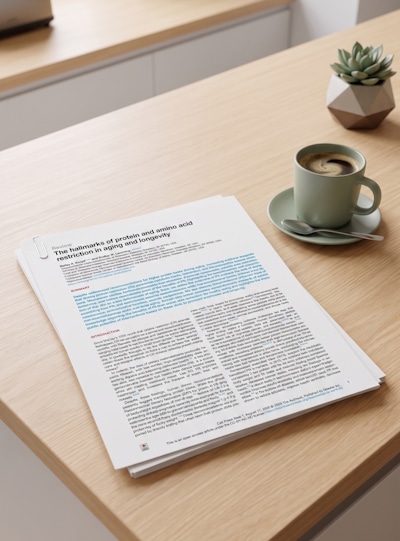
I looked into the Lamming review to see who was actually in those 350 studies. The strongest lifespan results (the ones that generate headlines) come from yeast, worms, flies, and mice. Animals eating less protein were often leaner and controlled blood sugar better, and some lived longer. The human studies were mostly short-term feeding trials measuring weight and fat loss over a few weeks. There is no data for human longevity under protein restriction. None of that is bad science. It’s exploring a very specific question: what happens to a body when you dial back the nutrient signals that tell it to grow? Here’s what you won’t find anywhere in it. A protein-restriction study on a group of 67-year-olds who lift three times a week. The Lamming review is concerned with how protein affects metabolism in sedentary adults, not in older lifters who actually use that protein to build and repair muscle. In fact, the closest literature (protein intake + resistance training in older adults) shows the opposite: higher protein improves strength, lean mass, and function. Deep dives here:
|
Free Guide: The Protein Playbook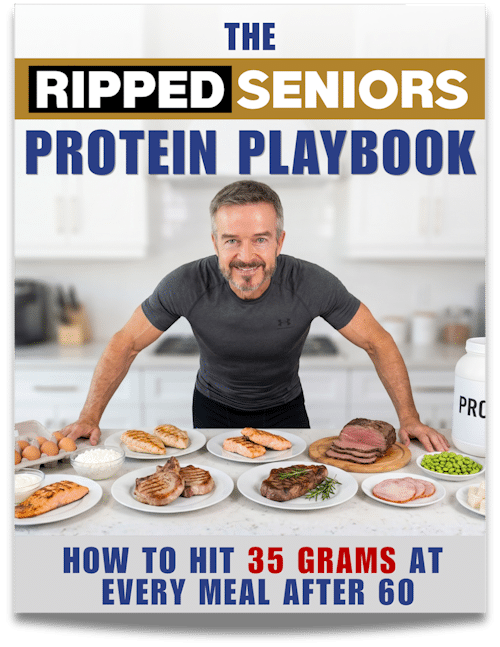
If the headlines left you unsure what to put on your plate, this guide is the answer in 18 pages. What 35 grams actually looks like in real food, both animal- and plant-based. The 3+1 rule. A sample day. The five mistakes I see most often after 60. And a printable cheat sheet for the fridge. No apps. No counting. Just a number and what it looks like on a plate.
|
What Everyone Agrees On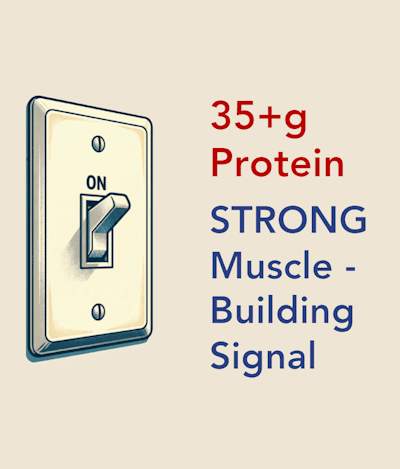
When Lamming was asked directly about this, he said the benefits of protein for muscle growth and exercise response in active people are crystal clear. His caution was aimed at sedentary adults who already eat enough. Protein is the raw material for muscle growth. After 60, our muscles get less responsive to the protein we eat — researchers call it anabolic resistance. A 30-year-old builds muscle from a 20-gram meal. Give a 65-year-old that same meal and not much happens. The trigger is an amino acid called leucine, and it takes roughly 2.5 to 3 grams of it in one sitting to flip the switch on. For most real food, that means 30 to 40 grams of high-quality protein per meal. So the protein gets you the signal. The training gives your body a reason to answer it. Skip either one and the other does much less than you’d hope. Deep dive here: Protein and Aging: Practicalities and Practice.
|
What I Didn’T Change
After reviewing the research, here’s what I changed: Nothing. Breakfast is still 35 grams, usually a protein shake. Lunch is 35 grams of protein. So is dinner. And most nights I still have a bowl of cottage cheese before bed, because your body does a lot of its repair work overnight and there’s good evidence that 30 to 40 grams of slow-digesting casein before sleep extends muscle repair through the night. That’s three meals, roughly 105 grams, plus a fourth feeding when I want the extra. If you’re smaller-framed, 30 grams a meal will do the job. If you’re over 200 pounds, aim for 40. For most of us in between, 35 is the number that’s high enough to work and easy enough to remember. Two headlines went past me this year. My plate looks the same as it did in December. |
How to Read Headlines Like These
There will be other headlines like these in the future. Many will overstate or distort the actual finding, and you’ll wonder whether you need to change something. Three questions will help sort it out. Who was actually in the study? Mice aren’t people. Young adults aren’t you. If the people studied don’t resemble you, the finding may still be true and still not apply. How long did it run? A six-week feeding trial tells you about six weeks. Muscle is built over many months and years. What’s the headline leaving out? In this case, the researcher himself said protein clearly benefits active people. That didn’t make a single headline I saw. So dig a little deeper and you’ll get the real story. |
Build Strong Legs: Watch These Next
|