|
OCTOBER 2026 |
On Ozempic?Don’t Lose Your Muscle With the Fat 
I have friends who have tried Ozempic. They lost a lot of weight and were pretty happy about it. But when they stopped taking it, the weight came back. I’m not against GLP-1 drugs. Excess visceral fat is a serious health hazard and, for many people, these drugs can really help. Like me, you may have friends or loved ones taking Ozempic right now. What concerns me, though, is what the bathroom scale doesn’t show. I was shocked when I discovered how much lean mass people lost in the GLP-1 drug trials. After 60, muscle is easy to lose and hard to build back – and we need it to stay strong, capable and independent. So this month I’ll cover what these drugs do to muscle, how to protect yours, and a simple monthly test to make sure the weight you lose is fat, not muscle. Joe Burjoski (Age 65) P.S. Try out my new free Belly Fat Loss Calculator that uses your waist measurement, not the scale, to build a healthy, effective fat loss plan. |
What the GLP-1 Drugs Do to Muscle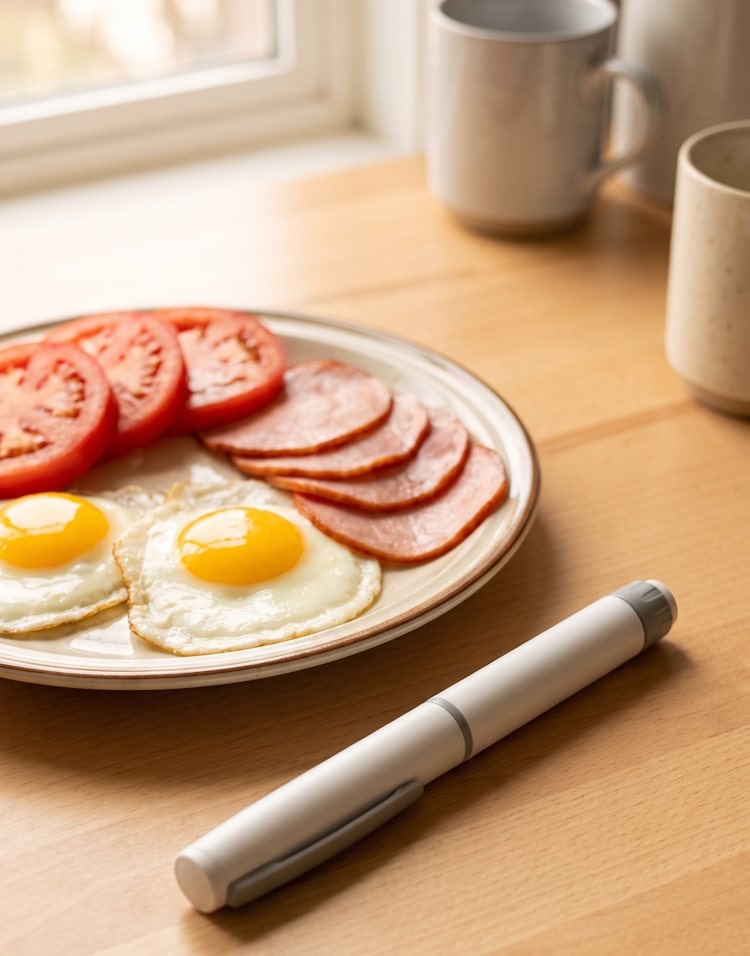
GLP-1 drugs like Ozempic, Wegovy, Mounjaro and Zepbound work by suppressing your appetite. You eat less, and the weight comes off fast. But some of that weight is lean mass, including muscle. In the main trial of semaglutide (the drug in Ozempic and Wegovy), close to 40% of the weight people lost was lean mass. In the big tirzepatide trial (Mounjaro and Zepbound), about 25% of the weight loss was lean mass. But to keep those numbers in perspective, “lean mass” also includes water, organ tissue and stored carbohydrate, so not all of it is muscle. The key point is that, anytime you lose weight, you are at risk of losing muscle as well as fat. And the more rapid the weight loss, the higher the risk of losing muscle. So any weight loss costs muscle if you don’t fight for it. The drugs just make the weight loss much bigger. The more serious risk shows up when people stop. A year after coming off semaglutide, trial participants had regained about two-thirds of the weight they’d lost. Research on older adults shows that regained weight comes back mostly as fat. How awful to go through that cycle and end up near your old weight with less muscle than when you started! Deep dive here: Tirzepatide body composition study | Weight regain after stopping semaglutide
|
The Bathroom Scale Can’T Tell Fat From Muscle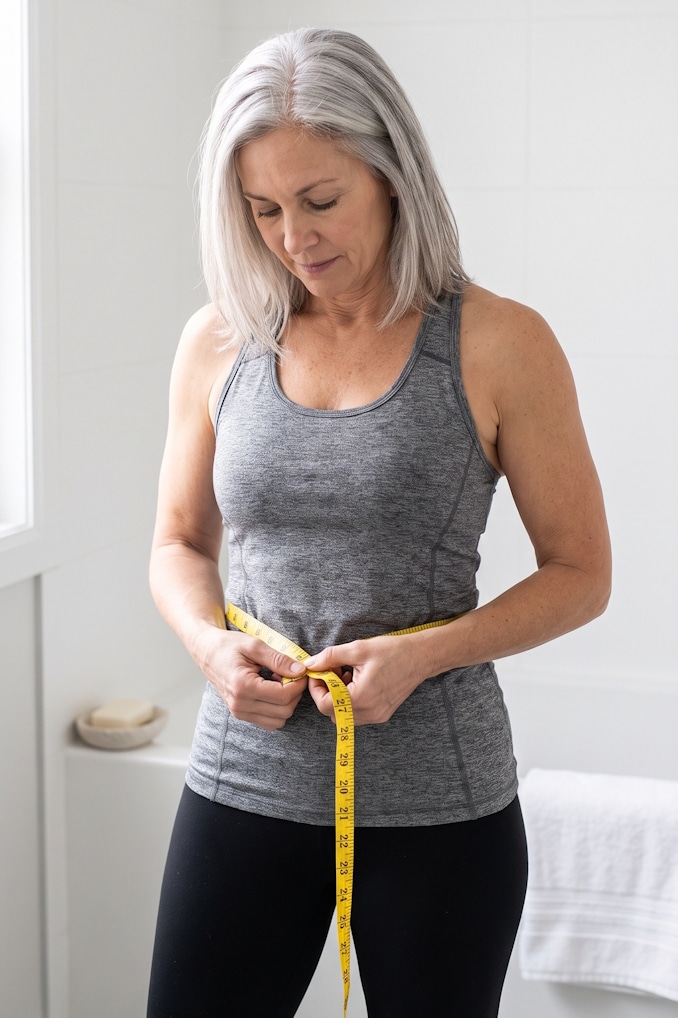
When you step on a bathroom scale, you get one number. It can’t tell you whether you lost a pound of belly fat or a pound of the thigh muscle that gets you out of a chair. That matters at any age, but even more after 60. Muscle is your reserve for climbing stairs, carrying groceries, catching yourself when you trip, and getting down on the floor with the grandkids and back up again. Lose too much of it and a lower number on the scale can leave you weaker than when you started. Your waist measurement is a better guide for fat loss than the scale. The fat that packs in around your middle, called visceral fat, is the dangerous kind, linked to heart disease and type 2 diabetes. When your waist shrinks, you know you’re losing the fat that counts. If your waist measurement is half your height or less, you are in the safe zone. I built a free Belly Fat Loss Calculator that uses your waist measurement, not the scale, to build a healthy, effective fat loss plan. 👉 Try the Belly Fat Calculator here: https://rippedseniors.com/belly-fat-calculator |
Free Course: Stay Strong, Stay Young
This 34-page beginner’s strength course shows you how to safely build strength after 60, even if you’ve never lifted a weight. With step-by-step instructions and simple progressions, you’ll learn how to build muscle, improve balance, and protect your independence – right at home, in just 25 minutes, two days a week. 🔺Clear, illustrated instructions for 8 essential exercises 🔺Beginner-friendly modifications and safe progressions 🔺A complete 4-week workout plan designed for adults over 60
|
How to Protect Your Muscle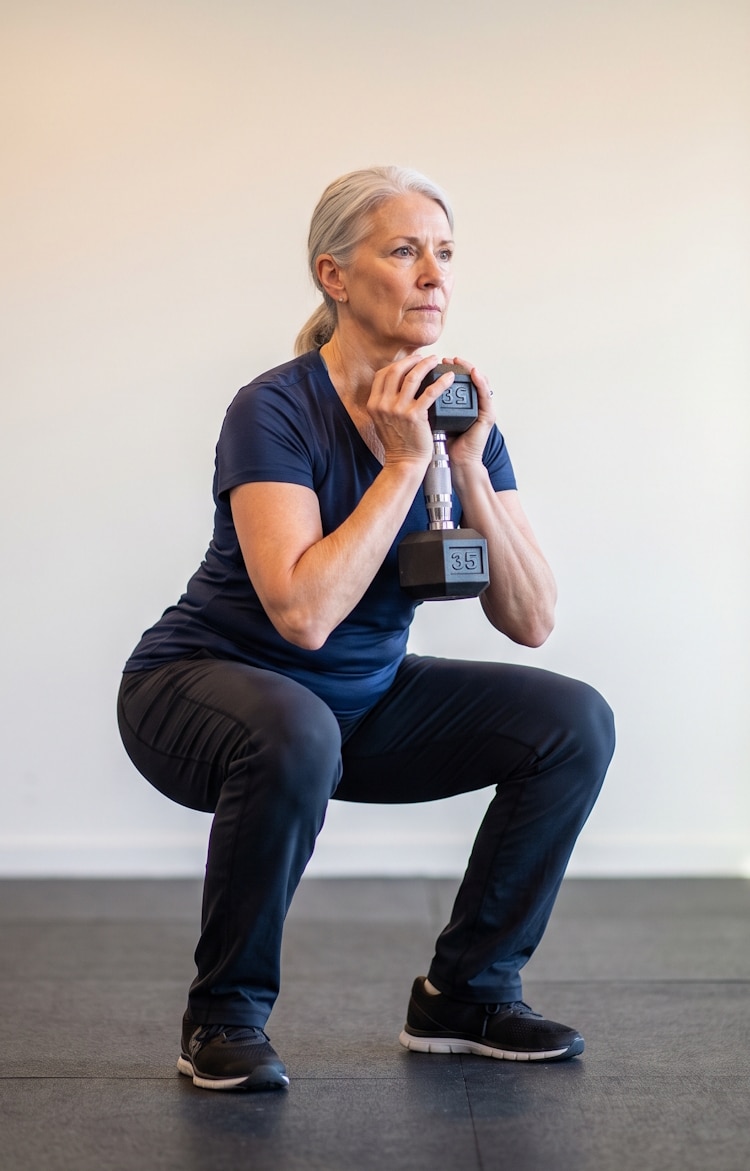
Just two habits will help you keep your muscle during weight loss, whether you’re on a GLP-1 drug or losing weight the old-fashioned way. 1. Lift weights two to three times a week. This is the big one. Researchers at Wake Forest University put adults in their 60s through an 18-month weight loss program. In the group that walked for exercise, 20% of the weight lost came from muscle. With diet alone, it was 16%. The group that lifted weights cut it to 10%. Walking is great for your heart, but lifting is what tells your body to hold on to its muscle. Train your whole body with weights heavy enough that the last few reps are hard. If you’re not sure where to start, my free guide Stay Strong, Stay Young walks you through the 8 essential exercises for 60+. 👉 Download it here: STAY STRONG STAY YOUNG 2. Eat 35 grams of protein at every meal. When your appetite is low, eat the protein first, before anything else on the plate. Greek yogurt, cottage cheese, eggs, fish, chicken and protein shakes are easy wins when you’re not hungry. The free Protein Playbook can help you reach this goal at every meal. 👉 Download it here: THE PROTEIN PLAYBOOK Deep dive here: Weight training vs. walking during weight loss after 60.
|
Your Monthly Self-Test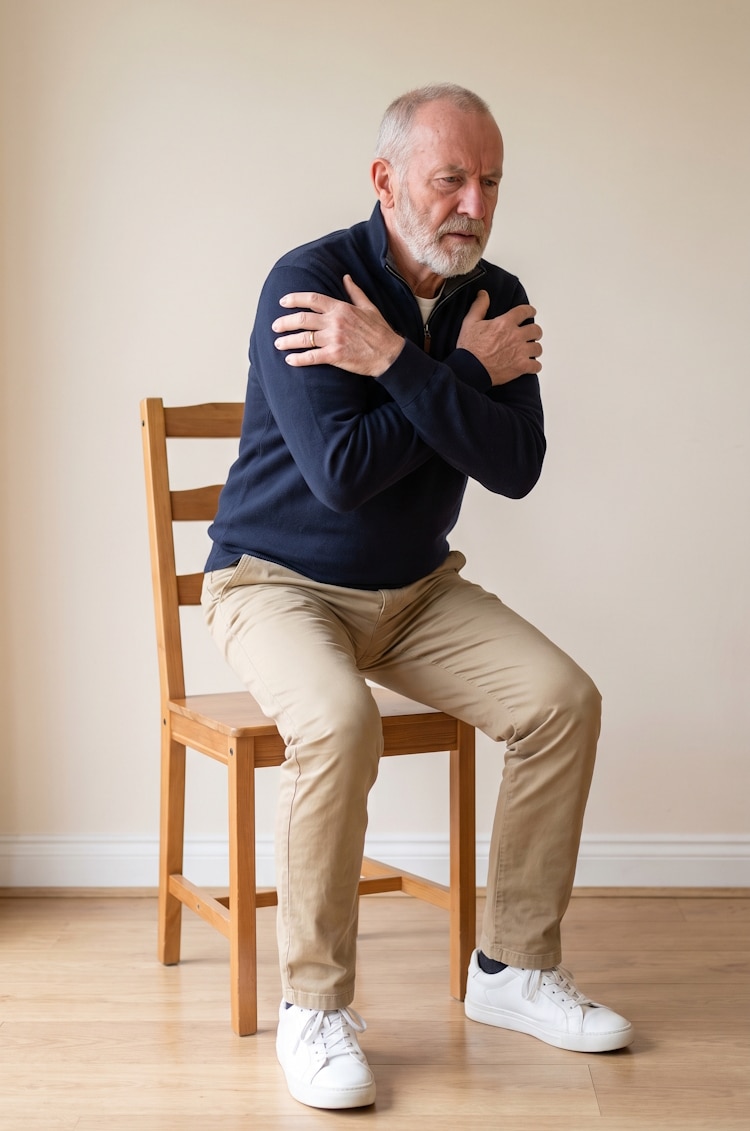
Just two measurements, done once a month (or weekly, if you like), can tell you whether you’re losing fat or muscle. Do them on the same day each month and write down the results. 1. Your waist. First thing in the morning, before you eat, wrap a tape measure around your bare belly at your belly button. Stand relaxed and breathe out normally. Don’t suck in. Record the number. 2. The 30-second chair stand. Use a sturdy chair without arms, about 17 inches high, with its back against a wall. Sit in the middle, feet flat, arms crossed over your chest. For 30 seconds, stand all the way up and sit back down as many times as you can. Count the number of stands and write it down. Then read the two numbers together: Waist down, stands the same or up: you’re losing fat and keeping your strength. Keep going. Waist down, stands dropping: you’re probably losing muscle. Lift more consistently, check your protein, and talk to your doctor. For reference, average scores are 14–19 stands for men and 12–17 for women at ages 60–64, and 12–18 for men and 11–16 for women at ages 65–69. Of course, more is better. Deep dive here: 30-Second Chair Stand Test Norms
|
Questions to Ask Your Doctor
If you’re on a GLP-1 drug or thinking about it, bring these questions to your next doctor’s appointment: 1. Can we measure my starting point? An inexpensive DEXA scan measures your fat, muscle and bone. 2. How much protein should I be eating? Ask especially if you have kidney problems. 3. How fast should I expect to lose weight, and how fast is too fast? 4. What’s the plan if I stop the drug? 5. Can you refer me to a dietitian to create an eating plan? Your doctor can help personalize your weight loss plan to ensure that you lose fat but keep every bit of muscle. 📺 Curious what a DEXA scan shows? Click here to watch. The drugs help take the fat off. Keeping your muscle is up to you. |
Watch These Next
|