|
DECEMBER 2025 |
Make 2026 Your Strongest Year Yet!
Welcome to the threshold of 2026! This issue is dedicated to the foundational pillars of vitality after 60: strength, motion and protein. Whether you are lifting your first weight, mastering the daily walk, or prioritizing the building blocks your muscles crave, these three simple habits lead to massive gains in strength, energy and confidence. Your strongest year begins here. Let’s get stronger together in 2026! Joe Burjoski Merry Christmas🎄and Happy New Year!🥳 |
Never Lifted Weights? Start in 2026!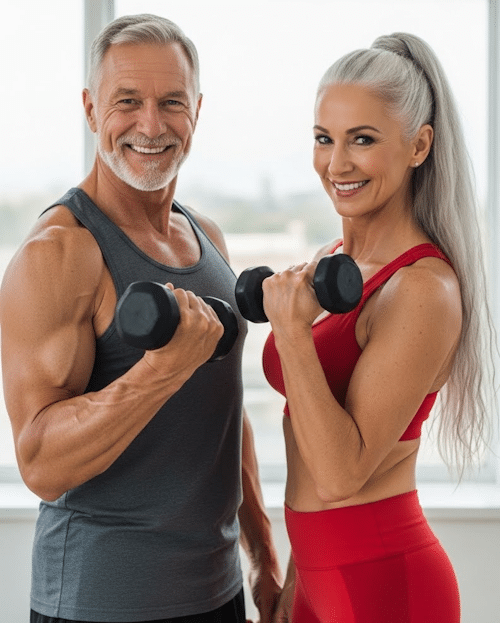
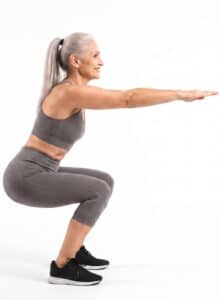
If you’ve never done strength training before, 2026 is the perfect year to start. Why? Because your 60s may actually be the best time in your life to start strength training. Your 60s are the decade when strength training delivers the biggest bang for your buck. Even small, consistent strength work now delivers outsized benefits: more energy, sharper mind, easier movement, better balance, stronger bones, and more confidence in everyday life. Strength training after 60 helps prevent muscle loss, reduces fall risk, supports bone health, and empowers you to do the things you love: travel, hiking, sports, and, of course, playing with the grandkids. You don’t need intense workouts to see results. Beginners over 60 respond extremely well to strength training. You don’t need a gym or heavy weights. Just a simple routine, done a few times per week, quickly produces improvements you can see and feel. If 2026 is the year you want to get stronger, download my free course “Stay Strong, Stay Young”, a complete beginner strength training course for adults 60, using the link below. |
Free Course: Stay Strong, Stay Young
If you’re over 60 and new to strength training, or it’s been years, Stay Strong, Stay Young gives you a safe, simple way to begin. This free course teaches the 8 essential exercises every 60+ adult should master, using short at-home workouts that build strength, balance, and confidence—without a gym or complicated routines. Click the button below to download your free course today.
|
Brisk Walking: Longevity Super-Power
If strength training feels like a big leap, here’s the simplest place to start in 2026: daily brisk walking. Walking is one of the most underrated fitness tools we have, especially after 60. It improves cardiovascular health, helps control blood sugar, supports joint health, reduces stress, reduces major disease risk and complements strength training beautifully. The key word is brisk. You need to walk fast enough to elevate your heart rate. You should have enough breath to talk, but not sing, while you’re walking. That pace will boost your cardio fitness while still being enjoyable. Even 20–30 minutes a day adds up quickly when done consistently. Over a year, that’s hundreds of miles of movement that’s building your cardio-respiratory resilience. If you want a habit that supports fat loss, heart health, and longevity, without feeling like “exercise”, this is it. Watch this video that explains the incredible, science-backed benefits of brisk walking: 📺 Click here to watch. |
Protein: The Simplest 60+ Strength Hack
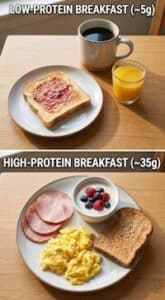
If you want to stay strong after 60, strength training is essential, but it’s only half the battle. The other half is protein. As we age, our bodies become less efficient at using protein to build and maintain muscle. That means eating “the same as always” isn’t enough anymore. We need at least 30 grams of high-quality protein at every meal to build and maintain muscle. The solution doesn’t have to be complicated. Focus on protein-forward meals: eggs, Greek yogurt, cottage cheese, fish, poultry, lean meats, or high-quality protein powder (especially for breakfast). Spread out your protein intake across the day rather than saving it all for dinner. One simple habit I personally rely on is a protein-rich evening snack. It supports overnight muscle repair and helps prevent late-night hunger. If strength is your goal for 2026, protein is the key enabler. I’ve linked a short video that explains it here: 📺Click here to watch. |
New Research: Why Muscle Matters
Over the past few years, research has become remarkably clear about one thing: muscle isn’t just about strength, it’s about longevity. Recent studies have linked higher muscle mass and strength in older adults with lower risk of falls, fractures, metabolic disease, cognitive decline, and even all-cause mortality. In simple terms, people who maintain muscle tend to live longer—and live better. What’s really encouraging is that these benefits don’t require extreme training. Moderate resistance exercise combined with adequate protein intake shows big improvements in function, balance, and quality of life well into later decades. Muscle also plays a critical role in blood sugar regulation and inflammation control, two factors closely tied to aging and chronic disease. That makes strength training and protein-forward nutrition not just fitness tools, but powerful health strategies. Perhaps the most important takeaway from the research is this: it’s never too late. Participants who started strength training later in life (even in their 90s!) still experienced meaningful gains within months. So, as you look ahead to 2026, think about building and preserving muscle as one of the most reliable ways to extend both your lifespan and healthspan. 📓Click here for a deep dive. |
Latest Videos From Ripped Seniors
|