|
JUNE 2026 |
Stay Strong Through the Summer SlumpWhy Most 60+ Lose Fitness In Summer – And How to Beat It 
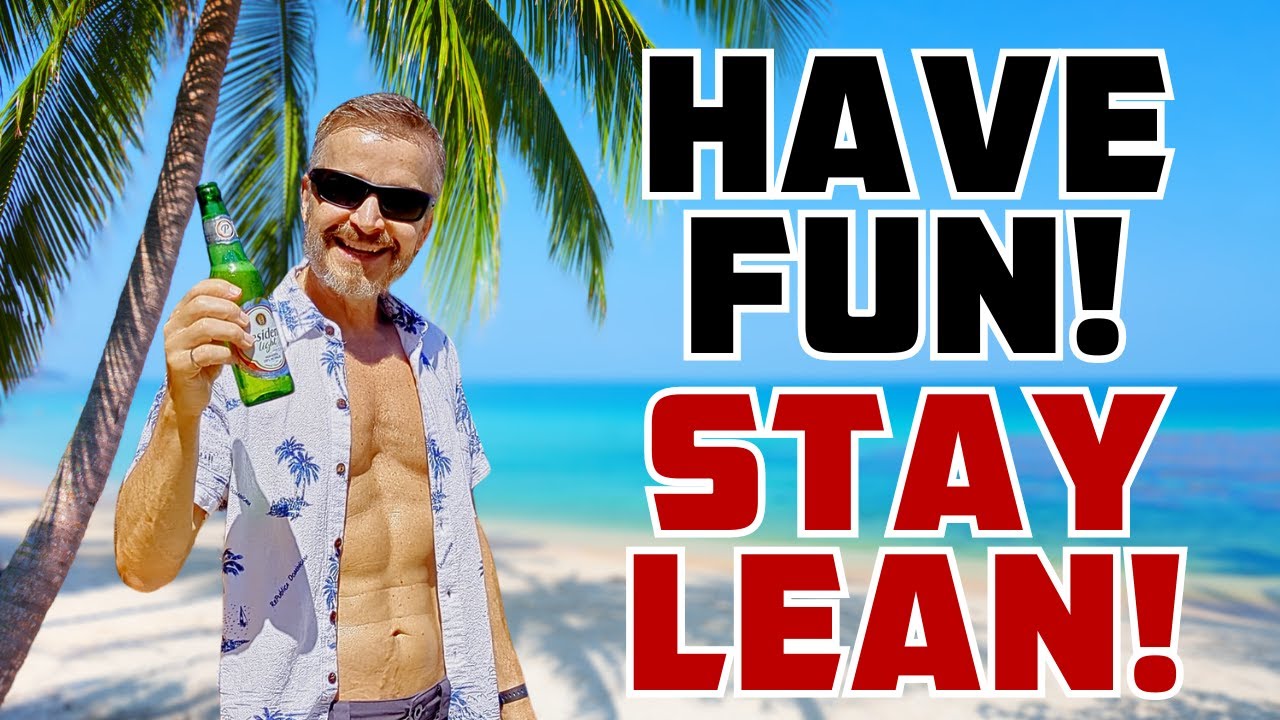
Summer is supposed to be the season of easy living. Long days, warm weather, more time outside. You’d think that fitness would take care of itself. But it doesn’t. Summer is actually when most adults over 60 lose the most ground. Travel disrupts routines. Heat keeps people indoors during the hottest hours. Grandkids visit, social calendars fill up, and the workouts that felt non-negotiable in February quietly slide. By September, a lot of people are surprised to find they’re weaker, softer, and less capable than they were three months earlier. It doesn’t have to go that way. This month, I’ll show you how to train through summer instead of around it — how to use the season’s natural advantages, train smart in the heat, and stay strong even when you’re on the road. Joe Burjoski (Age 65) |
Why Fitness Slides in the Summer
The summer slump isn’t a character flaw. It’s a normal response to a season that disrupts your established fitness habits. Three things drive it. First, routine collapse — travel, visitors, and irregular schedules break the consistency that strength and cardio depend on. Second, heat avoidance — the times you’d normally walk or train outside become uncomfortable or unsafe, especially after 60. Third, the “I’ll restart in September” trap — once you’ve missed a week, it’s easy to write off the rest of the season. Research on detraining is sobering. A meta-analysis found that adults over 60 lose strength roughly twice as fast as younger adults when they stop training. And cardio fitness fades even faster — VO2 max can drop measurably within just a few weeks of inactivity The good news: a minimal dose of strength training during summer prevents almost all of it. You don’t need to maintain your peak routine. You just need to not stop. Deep dive here: https://pubmed.ncbi.nlm.nih.gov/23347054/
|
How to Train When It's Hot
Heat changes the rules after 60. Your body regulates temperature less efficiently than it did when you were 40; you sweat less, and you dehydrate faster. The training still works, but you have to adjust when and how you do it. Here are a few principles I follow Train early. Get outdoor work done before 9 a.m. when possible. The temperature, humidity, and sun exposure are all easier on your body. I try to do my summer walking and HIIT before breakfast. Hydrate before you’re thirsty. Thirst lags behind dehydration, especially after 60. Drink a full glass of water before you head out, sip throughout, and add electrolytes if you’re sweating heavily. Move strength indoors. Lifting in a hot garage or basement is brutal in July. Move it to air conditioning if you can, or shift to bodyweight circuits in a cooler room. Know the warning signs. Dizziness, nausea, or a pounding headache means stop now and cool down. Heat illness is more dangerous after 60, so respect it. Train smart, and summer becomes one of the best training seasons of the year. |
Free Guide: The Ripped Seniors Protein Playbook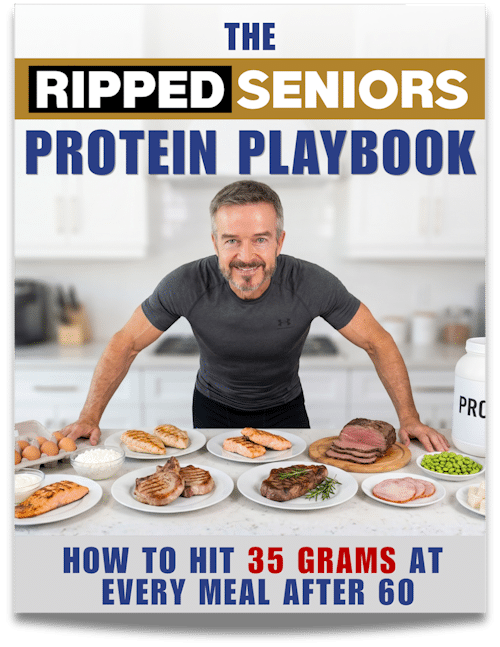
If there’s one nutrition lever that matters most after 60, it’s protein. The Protein Playbook shows you exactly how much protein you need, the best sources, and how to hit your daily target without complicated meal plans or counting every gram. It’s the guide I wish I’d had in my fifties.
|
How to Train on the Road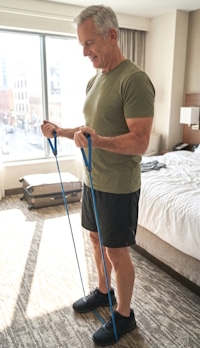
The single best piece of travel fitness gear isn’t a hotel gym membership. It’s a set of resistance bands that fits in a corner of your suitcase and weighs almost nothing. Don’t underestimate them. Research comparing resistance bands to free weights and machines has found they produce similar gains in strength — the muscle doesn’t know whether the tension comes from a dumbbell or a band, only that it’s working hard. For maintaining strength while you’re away from your normal setup, bands are more than enough. A full-body band routine covers everything: Push — band chest presses or overhead presses, anchored behind you or under your feet. Pull — rows with the band looped around a door anchor, a railing, or a sturdy post. Legs — banded squats, or step the band under your feet for added resistance on lunges. Three sets of each, taken close to failure, every other day. Ten to fifteen minutes. The principle is the minimum effective dose. You’re not chasing new gains on vacation — you’re holding the line so you come back without losing ground. A $40 set of bands does exactly that. 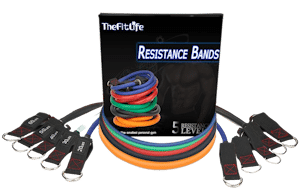
|
Summer Activities That Double as Training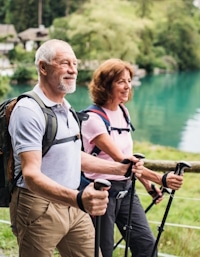
The other half of beating the summer slump is using the gifts the season gives you. Some of the best training you’ll do all year is available for free in June, July, and August. Hiking is full-body cardio, leg strength, and balance work in one package. Find a trail with some elevation and your heart rate, glutes, and quads will all thank you. Swimming is zero-impact, full-body, and unbeatable on a hot day. Even 20–30 minutes of relaxed lap swimming builds real aerobic capacity. Cycling — outdoor, not stationary — adds the variety of terrain and the joy factor that keeps you doing it. An hour of moderate cycling is excellent zone 2 work. Yard work counts more than people give it credit for. Carrying mulch bags, pushing a mower up a slope, digging — these are legitimate Action Bursts, especially if you do them with intent. The point isn’t to replace your training. It’s to recognize that summer offers training built into the things you already enjoy. Lean into it. A summer used well leaves you stronger in September than you were in May. That’s the goal. |
Stay Strong This Summer: Watch These Next
|